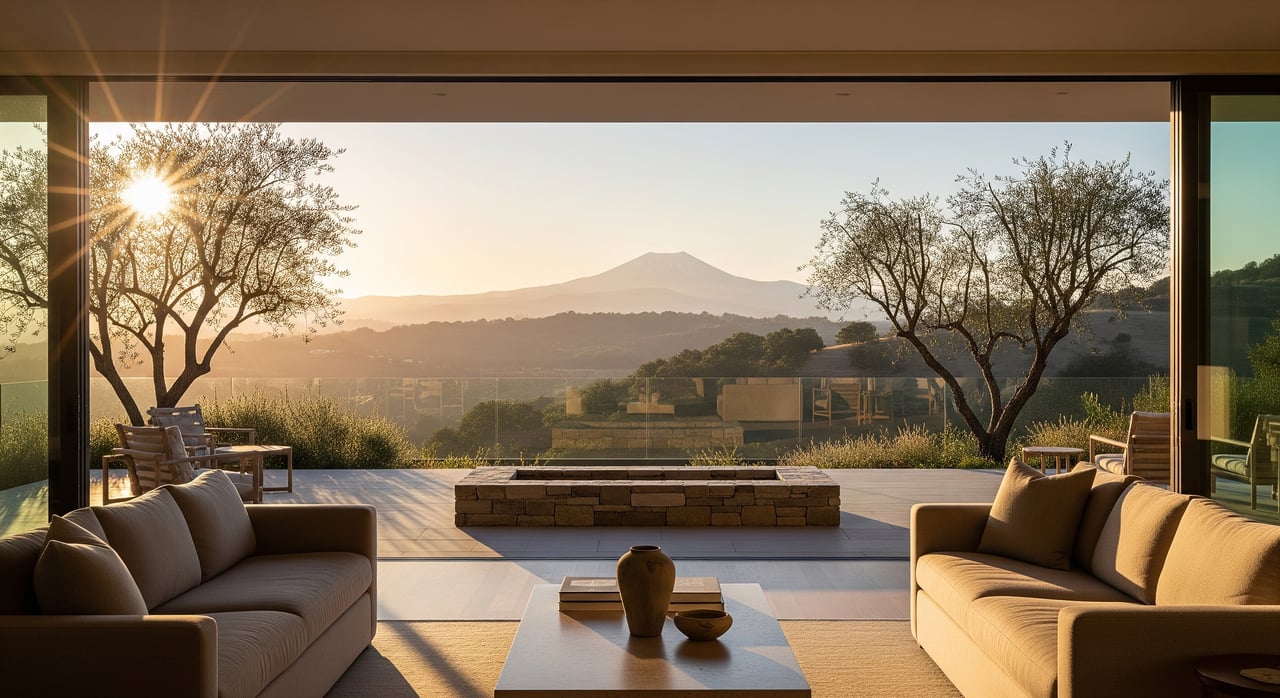
Craving more room to breathe without losing touch with the Bay Area? If you picture mornings that start with hillside light, afternoons on a private patio, and quick runs for errands in a low-key village center, Alamo may be on your shortlist. You want a clear sense of what life here truly feels like, beyond the listing photos. In this guide, you’ll learn how the setting, homes, daily rhythms, commutes, and trade-offs come together so you can decide with confidence. Let’s dive in.
Where Alamo sits
Alamo is an unincorporated community in Contra Costa County on the western slopes of the Diablo Range. You see rolling hills, oak and eucalyptus, and ridgelines that frame the sky. Many homes enjoy hillside or valley views, including Mount Diablo from higher sites. Since it is unincorporated, services come through county agencies rather than a city government, which contributes to a more independent, low-density feel.
The overall vibe
Alamo reads as low-density and estate-oriented. You notice long driveways, detached garages, and custom homes set back from the street. Many properties are single-family residences with generous yards, often with pools, patios, and space for outdoor living. The look is a mix of ranch-style classics and contemporary estates, and in many areas you also see equestrian facilities and paddocks.
Daily life in Alamo
Quiet, space, and privacy
If you value elbow room, Alamo delivers. Larger parcels give you distance between homes and room for gardens, hobby projects, and outdoor entertaining. Even in more centrally located streets, the overall pace feels relaxed and residential. Nights are calm, and weekends tend to revolve around home, nearby trails, and gatherings with friends.
Outdoor lifestyle at your doorstep
Alamo places you near significant open space. Las Trampas Regional Wilderness and Briones Regional Park sit to the west and northwest, and Mount Diablo State Park rises to the east. Residents hike, mountain bike, and, in some neighborhoods, ride directly to trail networks. Clear days bring long views over the valley and across the East Bay hills, which makes quick morning or after-dinner outings easy.
Equestrian culture
Horses are part of the landscape in parts of Alamo. You will spot private barns, turnout areas, and bridle paths where zoning allows. If you keep or plan to keep horses, you can find parcels designed for that lifestyle. If you simply enjoy the visual calm of country elements, the presence of paddocks and pastures reinforces Alamo’s semi-rural character.
Errands, dining, and nights out
Alamo’s village center, including Alamo Plaza and nearby commercial pockets, covers the basics: grocery runs, coffee, a wine shop, and neighborhood services. For a broader restaurant lineup, retail, and entertainment, many residents head to Walnut Creek, downtown Danville, or Blackhawk Plaza. Nightlife is limited within Alamo itself, so you will usually go to those neighboring hubs for a lively evening scene.
Homes, lots, and zoning
What you’ll find
Housing in Alamo is predominantly single-family. You see older ranch and cottage-style homes that have been remodeled over time, as well as newer or expanded estates. Many properties include amenities like pools, guest houses, outdoor kitchens, and, on select parcels, barns and stables.
Lot sizes and what they mean
Parcels are generally larger than in nearby urban centers, often ranging from quarter-acre up to multiple acres, especially in hillside or eastern areas. Zoning is primarily residential or rural, and some parcels allow equestrian or agricultural uses. Since Alamo is governed by Contra Costa County, you work with county planning for permits, setbacks, and allowable accessory uses like ADUs or barns. Larger parcels can mean more privacy and flexibility, along with higher upkeep and, in some cases, different utility considerations.
Commute and connectivity
Alamo does not have a BART station, so most people drive to nearby options such as Walnut Creek if they use rail. For day-to-day commuting, residents rely on I-680 and SR-24 to reach Walnut Creek, Oakland, Berkeley, San Francisco, or to connect toward the Peninsula and Silicon Valley. Drive times vary by route and time of day, so checking real-time conditions is key. For most daily needs, you will find yourself driving rather than relying on public transit.
Practical realities to budget and plan for
Services and municipal basics
Because Alamo is unincorporated, law enforcement, planning, and code enforcement are county-run. Fire protection is provided by the relevant local fire protection district, which can vary by address. Most homes near the center connect to municipal water and sewer, while some larger or outlying parcels may rely on septic systems or private water arrangements. Always confirm utility details during due diligence.
Taxes, insurance, and risk
Property taxes follow Contra Costa County rules and can include local assessments or bonds. In hillside areas, wildfire exposure can affect insurance availability and premiums. Many owners complete vegetation management and defensible space work as part of annual maintenance, and buyers should review insurance options early in the process.
Maintenance and ownership costs
Estate-scale properties come with real upkeep. Landscaping, pools, fencing, and, if present, barns or stables all require time and budget. Parcels with septic systems have service schedules and maintenance responsibilities. If your lot is near open space or hillside terrain, you may also need to comply with vegetation and defensible-space guidelines.
Who Alamo fits
Alamo fits you if you want a quieter, estate-style environment that still connects to major East Bay job centers and amenities. It is especially appealing if you value outdoor access, privacy, and room to design your property around your lifestyle. If you enjoy a more active downtown experience or prefer a walk-to-everything location, you may spend more time in nearby Walnut Creek or Danville.
Trade-offs to weigh
Every location involves balance. In Alamo, the upsides include larger lots, a semi-rural feel, and trail access. The trade-offs are higher purchase prices relative to many surrounding areas, car dependence for most errands, greater property maintenance, and potential wildfire-related insurance considerations in hillside zones. Matching these factors to your priorities is the key to a confident choice.
Buyer checklist for Alamo
Use this quick list to guide your due diligence:
- Confirm recent comparable sales and market trends through current MLS data.
- Review lot size, zoning, and permitted uses with Contra Costa County planning.
- Verify school attendance boundaries and enrollment policies on district sites.
- Identify utility connections, including whether a property uses public water and sewer or septic and private water.
- Determine the fire protection district that serves the address and review any defensible-space requirements.
- Request insurance quotes early, especially for hillside or open-space-adjacent parcels.
- Map commute routes along I-680 and SR-24 and test realistic travel times.
- Review property disclosures for slope stability, fault proximity, or landslide considerations on hillside sites.
A day in the life, imagined
Sunlight moves across the ridgeline as you sip coffee on the patio. A short drive brings you to a nearby trailhead, where you hike to a lookout that frames Mount Diablo. Late morning, you handle errands in the village center, then return home for lunch poolside. Evening plans take you to dinner in Danville or Walnut Creek, and you are home in minutes, winding back through quiet streets lined with old oaks.
Ready to explore Alamo in person?
If Alamo’s blend of space, privacy, and access speaks to you, take the next step. With boutique, white-glove representation, polished marketing insight, and deep East Bay expertise, Cynthia Money can guide you from first tour to close with confidence and care.
FAQs
Is Alamo rural or suburban?
- Alamo is low-density suburban with a strong semi-rural, estate feel and county-level governance rather than a city government.
How do commutes work from Alamo?
- Residents typically drive via I-680 and SR-24 and may use nearby BART stations such as Walnut Creek for regional rail.
Are there equestrian trails and zoning in Alamo?
- Yes, you will find private barns, bridle paths, and zoning that allows equestrian uses in parts of the community, subject to parcel-specific rules.
What schools serve Alamo students?
- Alamo is served by public school districts in the area, and there are private and parochial options nearby; verify boundaries and policies with the districts.
Who provides public services in Alamo?
- Contra Costa County provides law enforcement, planning, and code services, and fire protection is delivered by the relevant local fire protection district.
What should I know about utilities on larger lots?
- Many central properties have municipal water and sewer, while some larger or outlying parcels use septic or private water; confirm during inspections.
How much land can I expect with a home in Alamo?
- Lot sizes vary widely, from roughly quarter-acre parcels to multiple acres, especially in hillside and eastern areas; review parcel data for each property.