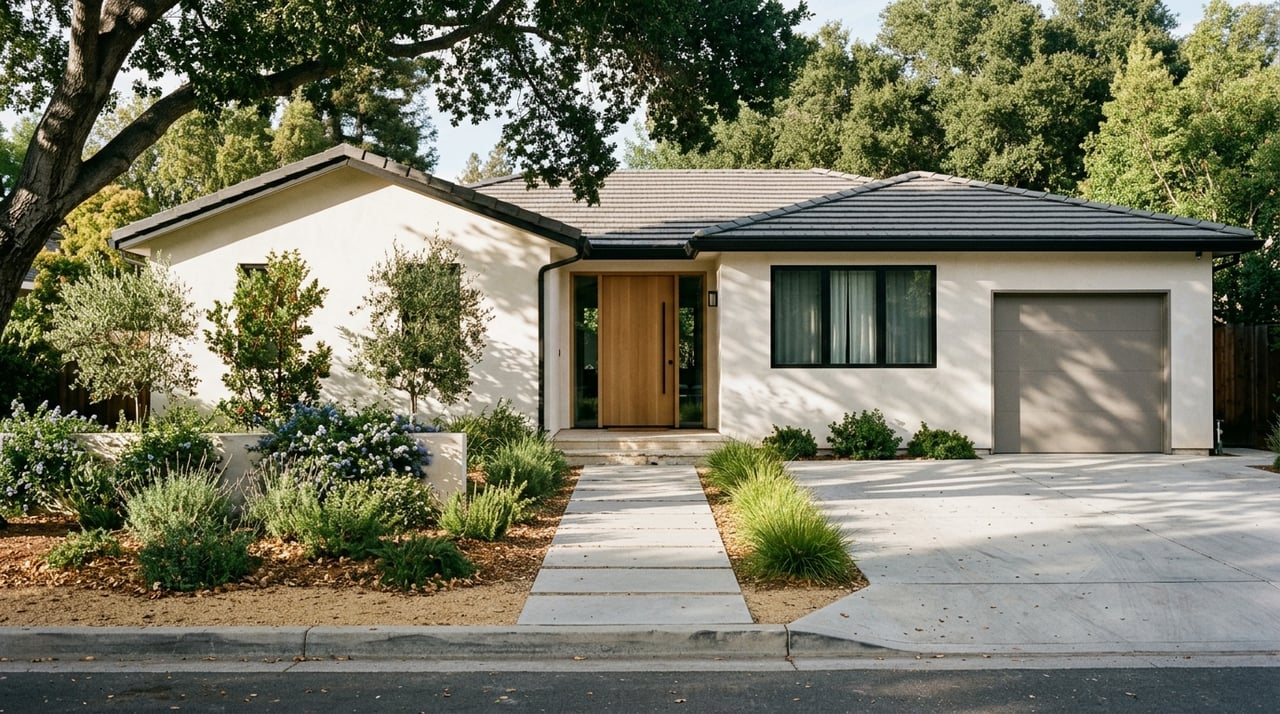
Wondering what Bay Area suburban living actually feels like once the moving boxes are gone? If you are comparing San Francisco with East Bay communities like Danville, San Ramon, Pleasanton, or nearby Alamo, the biggest difference is not that life gets slower. It gets organized differently. You still have full days, busy calendars, and plenty to do, but your routine often revolves more around driving, parks, planned errands, and activity hubs than a dense city street grid. Let’s dive in.
East Bay suburban life at a glance
If you are picturing a dramatic shift from city energy to total quiet, the reality is more nuanced. These East Bay suburbs are active places, but the shape of daily life is different from San Francisco.
The numbers help explain why. San Francisco had an estimated 827,526 residents in 2024, compared with 43,410 in Danville, 85,924 in San Ramon, and 75,664 in Pleasanton. Population density also looks very different, with San Francisco at 18,629.1 people per square mile versus 2,410.8 in Danville, 4,528.0 in San Ramon, and 3,308.5 in Pleasanton.
Housing patterns matter too. Homeownership is 38.2% in San Francisco, compared with 85.5% in Danville, 70.9% in San Ramon, and 67.0% in Pleasanton. Household size is also larger in the suburbs, with 2.77 people per household in Danville, 2.85 in San Ramon, and 2.73 in Pleasanton, versus 2.21 in San Francisco.
In day-to-day terms, that often means more single-family homes, more private outdoor space, and more routines built around home life. It can also mean more cars, more calendar coordination, and more time spent moving between destinations rather than walking from one neighborhood stop to the next.
What weekdays usually look like
A suburban weekday often starts with logistics. Instead of stepping out to a corner cafe or hopping on a nearby transit line, your morning may involve school drop-off timing, checking traffic, and deciding whether you are driving the whole way or connecting through transit.
That does not mean commuting is impossible. It means commuting tends to be more layered. In Danville, the Sycamore Valley Park and Ride offers about 240 parking spaces, bike racks, lockers, and County Connection routes that connect to BART and ACE.
Danville also points residents to County Connection service to the Dublin/Pleasanton and Walnut Creek BART stations. San Ramon highlights the San Ramon Transit Center, where commuters can park and board a County Connection express bus, and the city’s transit resources also connect residents to BART, ACE, AC Transit, carpool-to-BART options, and vanpool incentives.
Pleasanton is served by numerous public transportation agencies and also promotes bicycling as a commute alternative. The city also references student transportation programs that support walking, biking, carpooling, and transit.
Commute time is only part of the story
Mean travel time to work is 32.5 minutes in Danville, 34.7 in San Ramon, and 34.3 in Pleasanton, compared with 30.4 in San Francisco. So the shift is not always about a much longer commute. Often, it is about a more structured one.
In San Francisco, your trip may feel more direct because of the denser local network. In the suburbs, your day may include parking, a transfer, a planned departure window, or a carpool schedule. That planning becomes part of the rhythm.
School schedules shape the day
If your household includes school-age children, weekday life often runs on bell schedules as much as office hours. Danville’s County Connection 600-series routes are timed to school schedules, and San Ramon’s TRAFFIX program is designed to reduce congestion around schools.
That gives you a sense of how these communities function. Traffic patterns, after-school activities, and pickup timing are part of the daily routine in a very visible way.
Why hybrid work fits well here
If you work from home at least part of the week, these suburbs can align well with that lifestyle. Household broadband subscription rates are very high at 98.9% in Danville, 97.1% in San Ramon, and 97.9% in Pleasanton.
Combined with larger household sizes and a more suburban housing pattern, that data suggests a setup that can support home offices and hybrid routines. In practical terms, you may find it easier to structure your week around home-based work, school schedules, and targeted commuting days.
For many buyers moving from San Francisco, this is one of the biggest day-to-day changes. Home becomes more than where you sleep between work and social plans. It becomes the center of your workweek, your delivery point, your meeting backdrop, and often your recharge space too.
What weekends really feel like
Weekend life in East Bay suburbs usually feels community-focused and outdoors-oriented. Instead of building your day around nightlife or dense neighborhood hopping, you are more likely to plan around parks, trails, sports, errands, farmers’ markets, and a downtown core.
That does not mean weekends are boring or quiet. It means activity is often more scheduled and spread out across larger spaces.
Danville weekends
Danville has a year-round certified farmers’ market on Saturdays from 9 a.m. to 1 p.m. in downtown Danville. The town also notes six free municipal parking lots downtown.
That setup supports a practical kind of weekend rhythm. You can run errands, meet for lunch, stop by the market, and spend time downtown without the same parking pressure or density you may expect in San Francisco.
Alamo weekends
Alamo has a quieter, more park-oriented feel. Contra Costa County highlights places such as Hemme Station Park, Livorna Park, Andrew H. Young Park, and the broader Iron Horse Corridor.
Hemme Station Park offers Iron Horse Trail access, while Livorna Park includes bocce courts, a gazebo, and community events such as summer concerts and movie nights. For many households, that translates to weekends spent outside, close to home, with community events mixed into a lower-key routine.
San Ramon weekends
San Ramon offers one of the most structured mixes of recreation and amenities. The city says it has 59 parks, and its trails master plan is designed to connect neighborhoods, parks, schools, and open space.
City Center Bishop Ranch adds a concentrated destination for shopping, dining, and entertainment, with 300,000 square feet of retail, dining, and entertainment space, plus a luxury cinema and Equinox. The city also promotes recurring events through Parks & Community Services, which helps create a weekend pattern that can include sports, classes, errands, and dinner in one general area.
Pleasanton weekends
Pleasanton blends a historic downtown with extensive outdoor access. The city describes downtown Pleasanton as the vibrant heart of the community and says it includes more than 550 unique businesses.
Pleasanton also offers 46 parks, more than 60 miles of trails, and more than 700 acres of undeveloped open space. Many neighborhood parks are within half a mile of homes, which can make outdoor time feel more built into your weekend instead of something you have to plan far in advance.
Alviso Adobe Community Park adds another layer. The city describes it as a restored interpretive park that tells the story of the Amador Valley and notes that it once housed Meadowlark Dairy, the first certified dairy in California.
How it compares with San Francisco
The simplest way to think about it is this: suburban Bay Area living is not less active than city living. It is active in a different format.
San Francisco tends to offer a denser, more renter-heavy, more apartment-oriented environment. That often supports a lifestyle shaped by walking, shorter neighborhood-to-neighborhood trips, and a larger number of close-in destinations.
East Bay suburban living tends to offer more space, higher homeownership, and a stronger connection to parks, trails, and activity centers. Daily life often includes more driving, more scheduling, and more planning around school or commute logistics, but it can also create a greater sense of room, routine, and separation between work and home life.
For many people, that is the real tradeoff. You are not giving up activity. You are choosing a different kind of convenience.
Who suburban Bay Area living suits best
This kind of lifestyle often appeals to buyers who want more space and a more home-centered routine without leaving the Bay Area. That can include people relocating from San Francisco, long-distance buyers planning a move, or households looking for a better fit for hybrid work and fuller weekly schedules.
It can also appeal to sellers wondering why East Bay suburban homes attract strong interest. When buyers are searching for more square footage, outdoor space, and a routine built around parks, schools, and flexible commuting, these communities can check a lot of boxes.
The key is knowing what your own day looks like. If you want your routine to revolve around home, planned outings, recreation space, and destination-based errands, the suburban rhythm may feel natural very quickly.
What to consider before you move
Before making a move from San Francisco to the East Bay suburbs, think about the details that shape your actual week.
- How many days a week do you commute?
- Do you want a park-and-ride or transit connection option?
- How important is nearby trail or park access?
- Do you prefer a quieter residential setting or a suburb with a stronger downtown core?
- Would a home office or more indoor space change your daily quality of life?
Those questions usually matter more than broad labels like “city” or “suburb.” The best fit comes down to how you want your mornings, afternoons, and weekends to feel.
If you are weighing a move to Danville, Alamo, San Ramon, Pleasanton, or another East Bay community, having local guidance can make the decision much clearer. Cynthia Money offers personalized, high-touch support for buyers and sellers who want a thoughtful plan, strong market insight, and a smooth experience from start to finish.
FAQs
What does daily suburban life in the Bay Area look like?
- Daily life in East Bay suburbs like Danville, San Ramon, Pleasanton, and Alamo is often built around driving, school schedules, parks, planned errands, and commute coordination rather than dense walkable blocks.
Can you commute to San Francisco from East Bay suburbs?
- Yes. Cities like Danville, San Ramon, and Pleasanton provide access to park-and-ride options, express bus service, BART connections, ACE connections, carpool options, and related commute programs.
Is suburban Bay Area living good for remote work?
- It can be a strong fit for hybrid or remote work, especially since broadband subscription rates are very high in Danville, San Ramon, and Pleasanton.
What do weekends feel like in East Bay suburbs?
- Weekends often center on parks, trails, farmers’ markets, downtown errands, community events, and recreation rather than a nightlife-focused routine.
How is East Bay suburban living different from San Francisco living?
- The main difference is density and daily structure. San Francisco is denser and more renter-heavy, while East Bay suburbs tend to have more homeownership, larger households, more space, and routines built around driving and destination-based amenities.