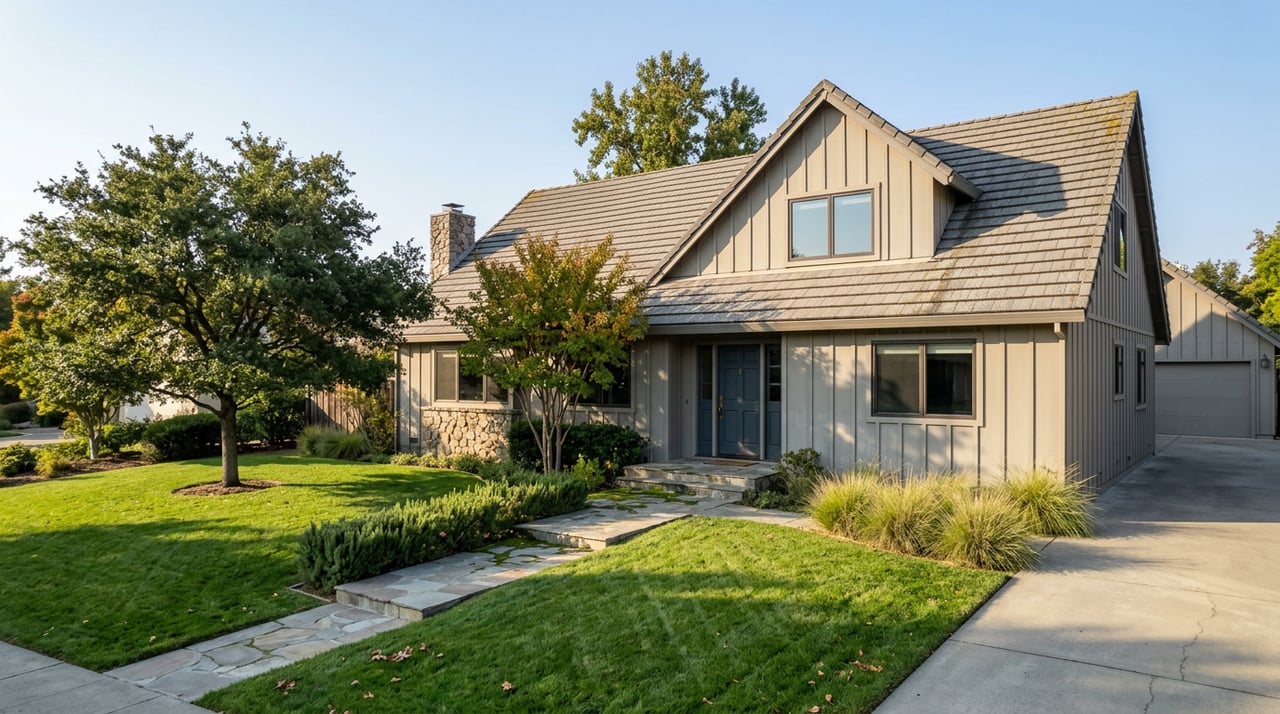
Saturday morning at Crow Canyon Gardens usually means a handful of volunteers pulling weeds near the allotment plots and maybe a jogger cutting through on the Bollinger Creek path. This Saturday, September 12, it means a cider press, several dozen apple varieties laid out for tasting, and a UC Master Gardener talking fruit trees to whoever wants to listen. It is San Ramon's annual Apple Pressing Day, and if you have gone before, you probably remember it happening somewhere else.
That detail is not trivia. It is the reason to go this year specifically.
A Farm Event, Held Off the Farm
Apple Pressing Day has long lived under the Saturday Fun on the Farm banner at Forest Home Farms, the city's 16-acre historic ranch on San Ramon Valley Boulevard. This year the city's own event listing says the pressing will happen at Crow Canyon Gardens instead, a different property entirely, tucked into the northwest corner of San Ramon near Park Place and Crow Canyon Road. Same cider press, same jars of apples, different address.
The move is not random. Crow Canyon Gardens is in the middle of the biggest change it has seen in years, and that change is worth understanding before you show up with your kids and a growler for fresh juice.
The Garden Behind the Cider
Crow Canyon Gardens is not a manicured city park. It is a meadow, a set of community garden allotments, a stretch of demonstration gardens tied to the old Mudd's restaurant building, and access down to Bollinger Creek. People who have spent time there describe it as unpolished on purpose, more working garden than showpiece, which is part of its appeal to residents who rent a plot or just want a quiet path with fruit trees overhead.
That character is exactly what the City of San Ramon has spent the last few years trying to plan around. A Crow Canyon Gardens Master Plan cleared the Parks and Community Services Commission in 2023, and last August the City Council authorized an agreement with the landscape architecture firm PlaceWorks for design and consulting work worth up to $798,380, running through June 2027. The plan's estimated construction cost, before design and permitting fees, runs around $4.24 million.
Phase one is not cosmetic. It centers on the Mudd's building, the old restaurant structure that anchors the site's demonstration gardens, and includes a site assessment, a hazardous materials evaluation, and preparation of bid documents for partial demolition and salvage. The city has directed staff to look at saving one room of the structure to preserve some of the site's history, but the rest of the footprint is on a different track. This is not a garden getting new benches. It is a garden getting rebuilt around what the city keeps calling a focus on nature and gardening rather than the built structures currently standing there.
So when you walk the same paths this Saturday that Apple Pressing Day is temporarily borrowing, you are looking at a version of Crow Canyon Gardens with a defined shelf life. Nobody has published a demolition date yet, and funding for later phases has already hit delays tied to development fee timing, so there is no reason to treat next spring as some kind of deadline. But the design work is funded and moving through 2027, and the garden you visit this weekend, allotments, meadow, creek access, old Mudd's building included, is not the garden that will be here once phase one wraps.
The Rest of a Finite Fall
Apple Pressing Day is not the only reason to be outside this month, and San Ramon's calendar makes clear that fall here runs on a short clock of its own.
Third Thursday Arts & Eats, the city's monthly evening gathering of local artists and food trucks at Dougherty Station Community Arts Center, only runs from May through October. That means the September 17 date and the October 15 date that follows it are the last two of the season before the event goes dormant until next spring. If you have been meaning to check it out, this is the stretch to do it, not a vague someday.
Forest Home Farms, meanwhile, keeps its own rhythm going even with the cider press relocated for the year. The park's free Saturday programs run through the harvest season with hands-on farm-life activities, and the site itself carries weight beyond a single weekend event. It sits on the National Register of Historic Places, is run largely by volunteer docents through the San Ramon Historic Foundation, and offers self-guided access to its tractor museum and Victorian-era grounds most days of the week at no cost. Apple season there this year means tasting organically grown varieties and hearing about old-fashioned apple recipes, a smaller echo of what is happening a few miles away at Crow Canyon Gardens.
Stringing the Day Together
The geography actually works in your favor if you want to make a full day of it. Central Park functions as a trailhead for the Iron Horse Regional Trail, and the bicycle and pedestrian overcrossing at Bollinger Canyon Road, which opened to the public in July 2025, closed a real gap in that connection. It is now straightforward to start at Central Park, ride the trail toward Bollinger Canyon, and loop through the neighborhoods that connect to both Crow Canyon Gardens and Dougherty Station without ever getting back in a car.
That kind of connectivity is easy to take for granted until you notice how recently it was finished. A year ago, stitching together an apple pressing at one end of town and an arts and food event at the other meant driving between them. Now it does not.
Why This September Specifically
None of this is urgent in the way a closing deadline is urgent. Nobody is losing access to Crow Canyon Gardens next month, and Forest Home Farms is not going anywhere. But the specific version of this fall, an apple pressing displaced onto a garden mid-renovation, a monthly arts night in its last two dates before winter, a trail connection still new enough that longtime residents have not fully built it into their routines, will not repeat exactly this way next September. Some of it will have changed by then. Some of it might be better. Either way, this is the year to see it as it currently stands.
If you already call San Ramon home, none of this changes your address. But it is worth noticing how much of what makes this stretch of the East Bay valuable, a working community garden about to be reimagined, a historic farm still run by volunteers who care about it, a trail system finally connecting neighborhoods that used to require a car, tends to happen quietly and get noticed only in hindsight. That is also true of the housing market here, which is why when the time comes to buy or sell in San Ramon, it helps to work with someone who has been paying attention the whole time.
If that day comes for you, Cynthia Money and The Money Group bring exactly that kind of local attention to every listing and every search. Request Your Personalized Consultation when you're ready to talk.